
“The single most important factor in evaluating a business is pricing power. If you’ve got the power to raise prices without losing business to a competitor, you’ve got a very good business. And if you have to have a prayer session before raising the price by 10%, then you’ve got a terrible business.” — Warren Buffett
Episode Overview
The final installment of a three-part pricing series focused on implementing pricing strategies in middle-market private companies. This episode covers the psychology of pricing, common errors, and a step-by-step execution framework.
Key Topics Covered
1. Strategic Foundation of Pricing
- Pricing as the single most important factor in business evaluation (Warren Buffett)
- Pricing power as an indicator of business quality
- Connection between pricing strategy and overall company value creation
- Reference to monopoly control as a key value builder driver
2. Psychology of Pricing
- Loss Aversion: Business owners’ fear of losing customers vs. gaining new ones
- Understanding that not all customers are good customers
- Overcoming the fear that price increases will hurt new customer acquisition
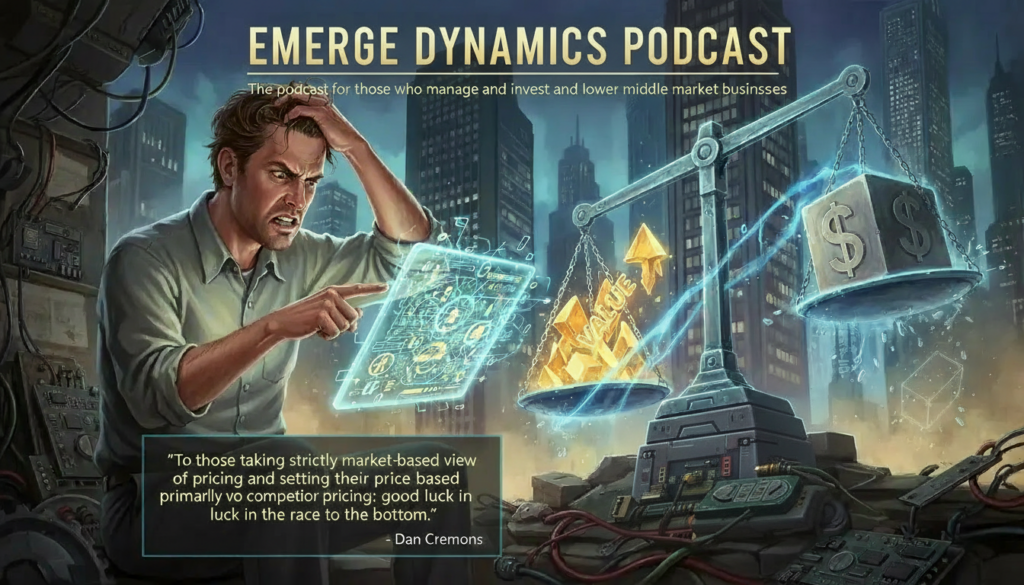
- Dan Cremons’ warning about “the race to the bottom” with competitor-based pricing
3. Common Pricing Errors
- Under-pricing: Setting prices just to win deals
- Set and forget: Not regularly reviewing pricing strategy
- One-size-fits-all pricing: Failing to segment customers by value perception
- Inconsistent pricing: Allowing sales teams to discount without strategy
4. The Airline Industry Case Study
- Example of sophisticated pricing in a commoditized industry
- Revenue management departments optimizing for customer segments
- Differential pricing based on booking timing, route urgency, and customer needs
- Almost no two passengers pay the same price
5. Step-by-Step Pricing Implementation Framework
Step 1: Baseline Assessment
- Document current pricing model
- Analyze how prices are established today
- Review historical pricing trends and experiences
Step 2: Research & Validation
- Competitor pricing analysis (as input, not driver)
- Customer value research (most critical)
- Gauge perceived value by customer segment
- Understand what customers actually value vs. what you think they value
Step 3: Testing
- Use test markets and customer subsets
- A/B testing for web-enabled businesses
- Avoid “ready, fire, aim” approach
- “In God we trust, all others bring data”
Step 4: Execution
- Assign clear ownership for price changes
- Timing: Connect price increases to events
- Segmentation: Tailor communication approach by customer importance
- Major customers: In-person meetings
- Smaller customers: Phone calls or personalized emails
- Communication: Be clear on the “why” and “what’s in it for them”
- Avoid impersonal form emails
Step 5: Measurement & Monitoring
- Continuous feedback loop
- Regular quarterly reviews (minimum)
- Adjust pricing frequency based on industry (daily/weekly/yearly)
- Never “one and done”
6. Core Principle: Value-Based Pricing
- Always match price to value created for customers
- Focus on customer’s perceived value, not competitor pricing
- Ensure pricing enables reinvestment in value creation
- Balance: Don’t leave money on the table, but don’t overcharge
Action Items for Listeners
- Assess your current pricing model
- Document how you establish prices today
- Conduct customer value research
- Survey or interview customers to understand what they truly value
- Review pricing quarterly
- Set calendar reminders to evaluate pricing strategy
- Segment your customers
- Identify different customer tiers based on value perception
- Test a price change
- Start with one product/service (as discussed in Part 2)
- Assign pricing ownership
- Designate a point person for pricing strategy execution
- Plan your communication strategy
- Determine which customers need personal outreach vs. email
- Set up measurement systems
- Create dashboards to monitor pricing effectiveness
Resources Mentioned
- Book: Winning Moves by Dan Cremons
- Previous Episodes: Parts 1 & 2 of the Pricing Series, Episode on Value Builder Drivers
- Contact: podcast@emergedynamics.com for questions or to share your pricing success stories
Key Quotes
“The single most important factor in evaluating a business is pricing power. If you’ve got the power to raise prices without losing business to a competitor, you’ve got a very good business. And if you have to have a prayer session before raising the price by 10%, then you’ve got a terrible business.” — Warren Buffett
“To those taking a strictly market-based view of pricing and setting their price based primarily on competitor pricing: good luck in the race to the bottom.” — Dan Cremons
“In God we trust, all others bring data.” – Unknown

Recent Comments